
Originally published May 28, 2024. From our educational archive. Treatment decisions and recovery instructions should be discussed with your own clinician.
Deep vein thrombosis (DVT) in the legs is a serious condition that requires prompt and effective treatment to prevent complications. In this guide, we'll explore the surgical options for treating DVT, including thrombectomy and venous stenting, the healing process, qualifications for surgery, what to look for in a surgeon, and why Dr. Edward Mackay and his team at Mackay Vein is the ideal choice for your vein care.
1. Thrombectomy Surgery: Removing the Blood Clot
Thrombectomy is a surgical procedure aimed at removing blood clots from deep veins, particularly in cases of severe or life-threatening deep vein thrombosis (DVT) that causes significant blockage. The procedure is performed typically in the legs with the patient under general or regional anesthesia, depending on the patient's condition and the surgeon's preference.
During the procedure, the vein surgeon makes a small incision in the affected area and uses special tools, such as catheters, suction devices, or mechanical devices, to break up and remove the clot from the vein.
Reasons to Consider Thrombectomy
Reducing the Risk of Complications: Thrombectomy helps to remove blood clots from deep veins, reducing the risk of complications such as pulmonary embolism.
Relieving Symptoms: Severe symptoms can be pain, swelling, and difficulty walking. Surgery can help alleviate these symptoms by removing the clot and restoring normal blood flow.
Preventing Long-Term Damage: Untreated DVT can lead to chronic venous insufficiency, venous ulcers, or other complications. Getting this can help prevent long-term damage to the veins and surrounding tissues by removing the clot early on.
Risks of Thrombectomy
While thrombectomy is generally considered safe and effective, like any surgical procedure, it carries certain risks and potential complications, including:
Bleeding: There is a risk of bleeding at the incision site or internally during the procedure, particularly if the patient is taking blood-thinning medications.
Infection: As with any surgical procedure, there is a risk of infection at the incision site or in the deep veins following thrombectomy.
Damage to Blood Vessels: In rare cases, thrombectomy may cause damage to the blood vessels, leading to further complications such as blood clots or narrowing of the veins.
Allergic Reaction to Anesthesia: Some patients may experience an allergic reaction to the anesthesia used during thrombectomy, although this is rare.
2. Venous Stenting: Restoring Blood Flow
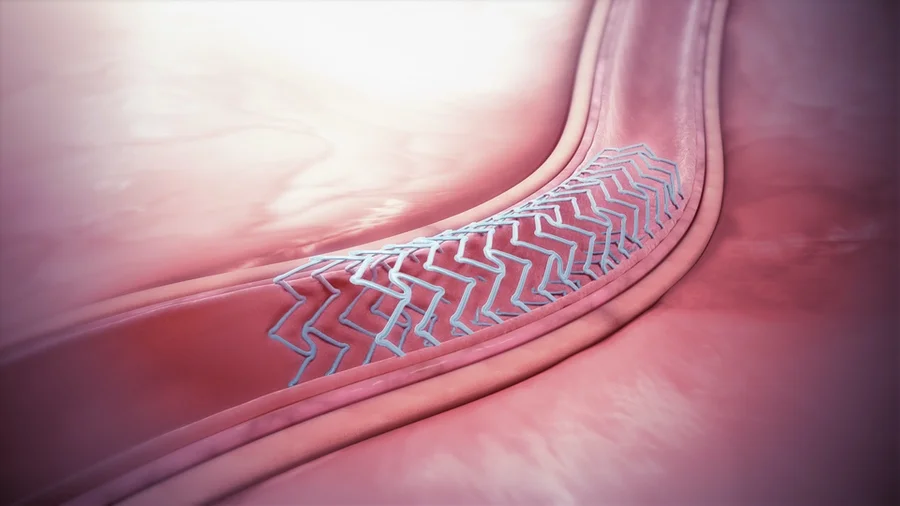
Venous stenting is a minimally invasive procedure used to treat deep vein thrombosis (DVT) and restore normal blood flow in the affected vein. Venous stenting involves the placement of a small metal or plastic tube called a stent into the affected vein to help keep it open and improve blood flow.
The procedure is typically performed under local anesthesia and guided by imaging techniques such as ultrasound or fluoroscopy. During the procedure, the vascular surgeon inserts a catheter with the stent into the blocked or narrowed vein and deploys the stent to expand and support the vein walls, allowing for improved blood flow and reducing the risk of clot formation. This procedure is often recommended for cases where DVT has caused narrowing or blockage of the vein.
Reasons to Consider Venous Stenting
Restoring Blood Flow: Venous stenting helps to restore normal blood flow in the affected vein, reducing the risk of complications such as chronic venous insufficiency or venous ulcers.
Preventing Recurrent Clots: By keeping the vein open and free from obstruction, venous stenting can help prevent recurrent blood clots from forming in the future.
Alleviating Symptoms: Venous stenting can help alleviate symptoms associated with DVT, such as pain, swelling, and discomfort, by improving blood flow and reducing pressure in the affected vein.
Risks of Venous Stenting
Stent Migration: There is a risk of the stent migrating or moving out of place after placement, which may require additional procedures to reposition or remove the stent.
Stent Thrombosis: In rare cases, blood clots may form inside the stent, leading to stent thrombosis and potentially blocking blood flow in the vein.
Infection: As with any surgical procedure, there is a risk of infection at the insertion site or in the surrounding tissues following venous stenting.
Allergic Reaction to Contrast Medium: Some patients may experience an allergic reaction to the contrast medium used during the procedure, although this is rare.
Healing Process After Surgery
After thrombectomy or venous stenting surgery, patients can expect some discomfort and swelling in the treated area. It's essential to follow post-operative instructions provided by your healthcare team, which may include taking prescribed medications, wearing compression stockings, and engaging in gentle exercise to promote circulation and prevent complications.
Qualifications for Surgery
Not all individuals with DVT will require surgery, as many cases can be managed with medications and lifestyle modifications. However, surgery may be considered for those with severe or recurrent DVT that does not respond to conservative treatments.
Consult with a board certified vascular surgeon to determine the most appropriate treatment DVT plan based your individual circumstances.
Choosing the Right Surgeon
When seeking treatment for DVT, choose a surgeon who is experienced, skilled, and board-certified in vascular surgery.
Dr. Mackay is a board-certified vascular surgeon dedicated to providing the highest level of care with a personalized approach to each patient's needs. He and his team of health professionals are committed to delivering exceptional care. Contact us today to schedule a consultation at 727-527-2888 and take the first step towards better vein health.