
Originally published March 30, 2022. From our educational archive. Treatment decisions and recovery instructions should be discussed with your own clinician.
The heart pumps nutrient-dense and oxygenated blood to the body through thick-walled blood vessels called arteries; the deoxygenated and depleted blood is then sent back to the heart through thin-walled vessels called veins. Tiny capillaries connect the arteries and veins.
Because the veins are much farther away from the heart than the arteries are, they don’t get as much benefit from the pumping action of the heart. Each vein, therefore, has many valves, which are tiny dual flaps that help the blood to flow in the proper direction toward the heart, rather than backward or stopping midstream.
The veins in your legs are the farthest away from your heart of any place in your body, plus you are usually sitting or standing – and with this combination of factors, the “used” blood in these veins must be forcefully pushed upward against gravity back toward the heart. This creates a true pressure buildup in the veins. This pressure can cause swelling, stretching, and twisting of the veins, plus sluggish blood flow, valve incompetence, and the formation of blood clots. All of this is known as venous disease or vein disease.
Let’s talk about the different venous diseases, their symptoms, and where you can get treatment in Tampa for everything from varicose veins to edema.
Venous Diseases and Their Symptoms
The main venous diseases include varicose veins, spider veins, and deep-vein thrombosis (DVT):
Varicose Veins
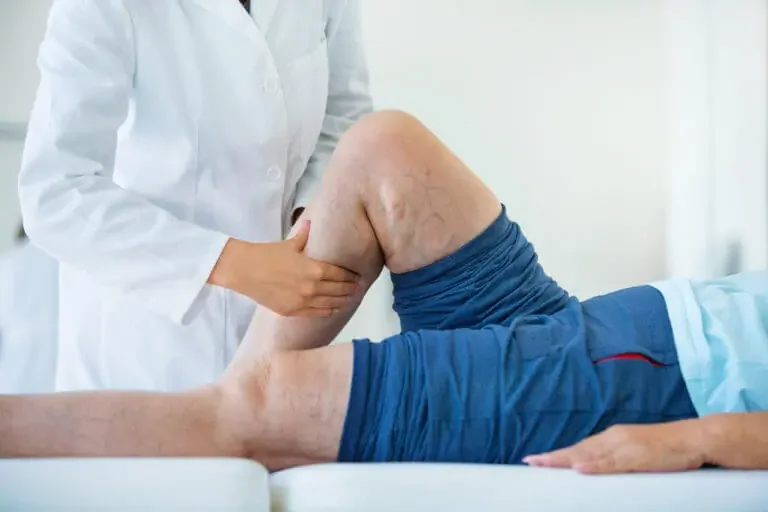
Varicose veins are twisted and bulging veins near the skin’s surface that occur when a defective or weak valve allows the blood to pool within the vein. Varicose veins usually appear in the legs, and they are twice as common in women as they are in men.
Symptoms of varicose veins include:
- Swollen, enlarged knotted clusters of blue or dark purple veins
- A sensation of heaviness and aching in the area
- Itching on the skin above the varicose vein
- Skin discoloration
- Ulcers (when the vein bursts through the skin and causes an open sore)
- Pain that worsens when standing or sitting for a long period of time
Spider Veins
These are small, damaged veins near the surface of the skin – usually on your face or legs – that can appear in the form of a thread, web, or branches. Spider vein symptoms include:
- Flat veins that usually show up as red, blue, or purple
- Webbing or branching of the affected veins
- Discomfort and swelling
Deep Vein Thrombosis
Deep vein thrombosis is a serious venous disease affecting a larger vein located deep below the skin’s surface. In deep vein thrombosis, a blood clot (thrombus) forms in a vein that is usually inside a muscle in the leg.
Nearly half of cases of DVT are asymptomatic. The problem is that this venous disease can cause a pulmonary embolism, which is when the clot detaches from the vein and travels to your lungs. This can be fatal, so it warrants medical attention if it generates any type of symptoms.
Symptoms of deep vein thrombosis include:
- Dermatitis (skin inflammation)
- Hyperpigmentation (dark areas on the skin)
- Redness and warmth
- Generalized swelling
- Superficial vein distention (which causes the skin to be red, warm, and tender above the affected vein)
- Pain that feels like muscle cramping and soreness, especially in the calf muscle
- Cyanosis (bluish color of limbs or toes)
- Fever and chills
Venous Disease Treatment in Palm Harbor, St. Petersburg, and Largo
Whatever vein issue you have, get a lasting solution by visiting us at Edward G. Mackay and Associates. Our vein specialist Dr. Edward Mackay is a board-certified and fellowship-trained vein surgeon who has years of experience in treating venous disease for both cosmetic and medical purposes. Dr. Mackey uses state-of-the-art methods to treat your venous disease.
To find out more about your venous disease or to get treatment, set up an appointment by calling us today at (727) 781-5652 or by filling out our appointment request form online. We look forward to serving you!